Don't just find the research — know if it holds up
Last updated August 31, 2026
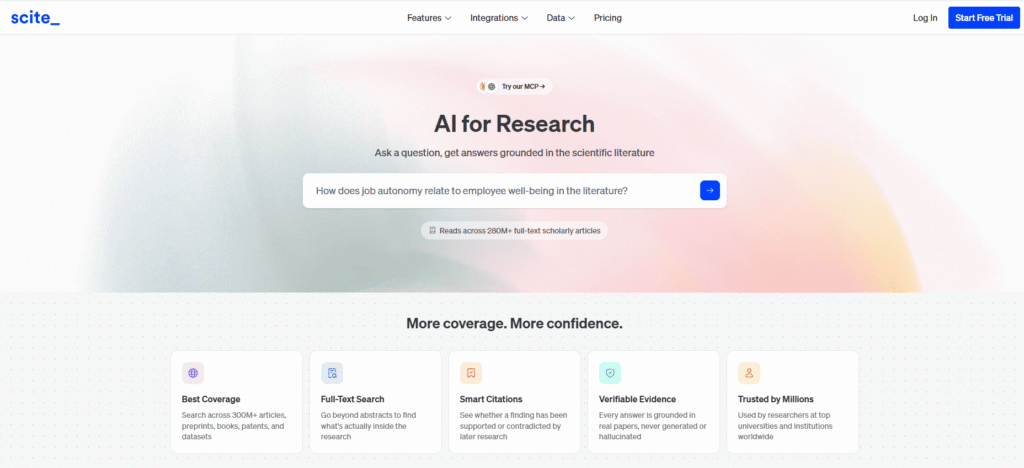
Scite is an AI-powered research platform that goes beyond finding papers — it helps researchers understand whether the evidence behind those papers is strong, contested, or uncertain. Now part of Research Solutions, Scite has indexed 1.6 billion+ citations across 300M+ scholarly sources including articles, preprints, books, patents, clinical trials, grants, and datasets — and serves over 2 million researchers at top universities and institutions worldwide including Harvard, Oxford, Stanford, Johns Hopkins, and the Mayo Clinic.
The core innovation that sets Scite apart from every other AI research tool is Smart Citations — a system that classifies how later research has cited a paper, showing whether subsequent studies have supported, contradicted, or simply mentioned a finding. Instead of just counting citations, Scite tells you whether the science behind a claim actually holds up. This transforms literature review from a volume exercise into a genuine evidence quality assessment.
Scite is built on the largest licensed database of scholarly content in AI research — with direct agreements with Wiley, SAGE, and 40+ more publishers, plus the full open access corpus. When other AI research tools hit a paywall and guess at the content, Scite reads the full text of the paper. Every answer the Scite AI Assistant gives links back to the specific sentence in the specific paper it came from — verifiable in one click.
Scite runs inside Claude, ChatGPT, and any MCP-compatible assistant, integrates with Zotero, and is available via API for teams building custom research tools. Individual plans start at $20/month (annual) with a 7-day free trial.
Pros
Cons
PhD students and academic researchers — Scite’s Smart Citations transform literature review from counting citations to understanding evidence quality. Knowing whether a paper’s findings have been supported or contradicted by later research is exactly what rigorous academic work requires — and Scite is the only tool that provides this at scale.
Research institutions and universities — Clemson University’s use of Scite nearly doubled since their fall semester adoption. Harvard, Oxford, Stanford, Johns Hopkins, and Mayo Clinic researchers rely on Scite for credible, verifiable literature search. Enterprise and team plans provide institutional access with usage management.
Pharmaceutical and biotech researchers — Trace a drug target or mechanism of action from funded grant to published finding to patent application — all in one database. Smart Citations help identify whether preclinical findings have been replicated or challenged in subsequent studies.
Science journalists and policy researchers — Verify whether a scientific claim is well-supported or contested before publishing or citing it in policy documents. Scite’s evidence quality signals are invaluable for anyone who needs to assess the reliability of scientific findings quickly.
Researchers already using Claude or ChatGPT — Scite’s MCP integration and ChatGPT/Claude plugins let you add citation-backed research capabilities to your existing AI workflow without switching tools. Ask a research question in Claude and get answers grounded in 300M+ real papers.
Teams building research tools — The Scite API lets developers and research teams build custom literature search, citation verification, and evidence assessment tools on top of Scite’s 1.6B+ citation database.
Uncommon use cases: Using Smart Citations to identify which foundational papers in a field have been most frequently contradicted — a signal for contested or evolving scientific consensus; using Scite’s patent and grant datasets to map the commercialization pathway of a research area; using the MCP server to power autonomous research verification agents.
| Feature | Scite | Elicit | Semantic Scholar |
|---|---|---|---|
| Primary focus | Citation verification + evidence quality | Systematic reviews + research agent | Paper discovery + citation graphs |
| Smart Citations (supported/contradicted) | ✅ Yes — core feature | ❌ No | ❌ No |
| Sources indexed | 300M+ (articles, patents, trials, grants) | 138M+ papers + 545K clinical trials | 220M+ papers |
| Full-text search | ✅ Yes — 280M+ full-text articles | ⚠️ Limited | ⚠️ Limited |
| Publisher agreements | ✅ Yes — Wiley, SAGE, 40+ publishers | ❌ No | ⚠️ Limited |
| 1.6B+ citations indexed | ✅ Yes | ❌ No | ✅ Yes |
| AI research assistant | ✅ Yes — sentence-level citations | ✅ Yes — sentence-level citations | ❌ No |
| Systematic review automation | ❌ No | ✅ Yes — PRISMA 2020 | ❌ No |
| Research reports | ❌ No | ✅ Yes — customizable | ❌ No |
| Patent and grant datasets | ✅ Yes (Pro) | ❌ No | ❌ No |
| MCP integration | ✅ Yes — Claude, ChatGPT | ❌ No | ❌ No |
| Zotero integration | ✅ Yes | ✅ Yes | ❌ No |
| API access | ✅ Yes (Pro) | ✅ Yes (Pro) | ✅ Yes — free |
| 7-day free trial | ✅ Yes | ❌ No (free plan) | ✅ Fully free |
| Paid from | $20/mo (annual) | $49/user/mo (annual) | Free |
| Best for | Citation verification, evidence quality, full-text search | Systematic reviews, pharma research, data extraction | Free paper discovery and citation tracking |
Choose Scite if: You need to understand whether scientific findings are supported or contradicted by later research — not just find papers, but assess the quality and reliability of the evidence behind them. Scite’s Smart Citations, full-text search across 300M+ sources, and MCP integration with Claude and ChatGPT make it the strongest tool for evidence verification and citation-backed research.
Choose Elicit if: You need systematic literature review automation, PRISMA 2020 compliance, large-scale data extraction (up to 20,000 data points), or a Research Agent for high-stakes pharmaceutical and biomedical decisions. Elicit is stronger for structured evidence synthesis; Scite is stronger for citation quality assessment.
Choose Semantic Scholar if: You need free, large-scale academic paper discovery and citation tracking without a subscription. Semantic Scholar indexes 220M+ papers and is completely free — but lacks Smart Citations, full-text search, and AI-generated answers.
Step 1: Start your free 7-day trial
Step 2: Search your research topic
Step 3: Use Smart Citations to assess evidence quality
Step 4: Ask the Scite Assistant
Step 5: Connect to your existing workflow
Step 6: Set up Citation Alerts
| Plan | Price | Best For |
|---|---|---|
| Basic | 96/yr) | Individual researchers — unlimited assistant, full-text search, Smart Citations, 250 MCP credits/month, collections up to 1,000 papers |
| Pro | 120/yr) | Deep research — everything in Basic plus API access, 2,500 MCP credits/month, collections up to 10,000 papers, patent/clinical trial/grant datasets |
| Team and Enterprise | Custom | Institutions and organizations — contact sales@scite.ai for team pricing, institutional access, and custom deployments |
Free trial: 7-day free trial available on both Basic and Pro plans — access all premium features before committing. After the trial, you are automatically enrolled in the plan you selected. Cancel anytime before the trial ends to avoid charges.
Student and academic discounts: Available — recommend Scite to your institution and email customersupport@researchsolutions.com and sales@scite.ai to receive a discount code.
What’s included on both paid plans:
Pro adds over Basic:
If Scite isn’t the right fit for your research workflow, budget, or use case, here are the closest alternatives worth evaluating:
1. Elicit The strongest alternative for systematic literature reviews and high-stakes research decisions. Elicit automates PRISMA 2020-compliant systematic reviews, extracts data from up to 20,000 data points at once, and provides a Research Agent that set the frontier on BioDecisionBench in August 2026. Better than Scite for structured evidence synthesis and pharmaceutical research workflows. Scite is better for citation quality assessment and understanding whether findings hold up over time.
2. Semantic Scholar A fully free academic paper search platform from the Allen Institute for AI — indexes 220M+ papers with semantic search and citation graphs. Better for free paper discovery and citation tracking without a subscription. Lacks Smart Citations, full-text search, AI-generated answers, and patent/grant datasets. Completely free vs Scite’s $20/month minimum.
3. Consensus An AI research tool that searches 200M+ papers and generates consensus summaries showing what the scientific literature agrees on. Better for quick, accessible answers to research questions at a lower price point ($9.99/month). Less capable than Scite for citation quality assessment and full-text search across publisher-licensed content.
4. Manus AI A general-purpose autonomous AI agent that handles multi-step research tasks including web research, data analysis, and report generation. Better for general research tasks outside of academic literature. Lacks Scite’s 300M+ scholarly database, Smart Citations, and publisher-licensed full-text access. Better for business research; Scite is better for scientific literature.
5. Writesonic Relevant for researchers who need to communicate findings — Writesonic generates blog posts, research summaries, and content from research inputs. Better for turning Scite’s research findings into published content. Not a research tool itself.
6. SE Ranking Relevant for research institutions and academic publishers that need to track how their published research appears in AI search results. SE Ranking’s AI visibility tracking helps institutions understand how their work is being surfaced by ChatGPT, Gemini, and other AI tools — complementary to Scite’s citation tracking.
Browse more tools in AI Tools For Research → and AI Agents →
Verdict: Yes — the most unique AI research tool available for understanding evidence quality, and the only platform that shows whether scientific findings have been supported or contradicted by later research.
Scite’s Smart Citations solve a problem that no other AI research tool addresses: not just finding papers, but understanding whether the evidence behind them is reliable. For any researcher who has ever cited a paper only to discover later that its findings were contradicted by subsequent studies, Scite is the tool that prevents that mistake.
The combination of 300M+ sources, full-text search powered by direct publisher agreements, 1.6B+ citations indexed, and MCP integration with Claude and ChatGPT makes Scite one of the most comprehensive and accessible research platforms available in 2026.
At 49/month) while offering a genuinely differentiated capability that Elicit doesn’t have.
Best for: PhD students, academic researchers, science journalists, policy researchers, and pharmaceutical teams who need to assess the quality and reliability of scientific evidence — not just find papers, but understand whether those papers’ findings hold up.
Skip it if: You need full systematic review automation with PRISMA 2020 compliance and large-scale data extraction — Elicit is the stronger choice for that workflow. For basic free paper discovery, Semantic Scholar covers the use case at no cost.
| Criteria | Rating |
|---|---|
| Accuracy & Reliability | ⭐ 4.9/5 |
| Ease of Use | ⭐ 4.8/5 |
| Features & Functionality | ⭐ 4.8/5 |
| Performance & Speed | ⭐ 4.7/5 |
| Customization | ⭐ 4.5/5 |
| Security & Privacy | ⭐ 4.7/5 |
| Customer Support | ⭐ 4.6/5 |
| Value for Money | ⭐ 4.8/5 |
| Integrations | ⭐ 4.9/5 |
What is Scite?
Scite is an AI-powered research platform that helps researchers discover and evaluate scientific literature through Smart Citations — showing whether studies support or contradict a claim. Now part of Research Solutions, Scite has indexed 1.6B+ citations, searches 300M+ scholarly sources, and serves 2M+ users worldwide.
Is Scite free?
Scite offers a 7-day free trial with access to all premium features — no credit card required. There is no permanent free plan after the trial. Basic plans start at $20/month (billed annually). Student and academic discounts are available.
How much does Scite cost?
Scite’s Basic plan is 96/year). The Pro plan is 120/year). Team and Enterprise pricing is custom — contact sales@scite.ai. A 7-day free trial is available on both plans.
What are Smart Citations?
Smart Citations are Scite’s core feature — they classify how later research has cited a paper, showing whether subsequent studies have supported, contradicted, or simply mentioned a finding. This lets researchers quickly assess whether a paper’s claims are well-established, contested, or uncertain in the broader literature.
How is Scite different from Google Scholar?
Google Scholar counts citations but doesn’t tell you whether those citations are supportive or contradictory. Scite’s Smart Citations classify each citation as supporting, contradicting, or mentioning — giving you evidence quality signals, not just citation counts. Scite also provides full-text search across 300M+ sources and an AI assistant with sentence-level citations.
How is Scite different from Elicit?
Scite is stronger for citation quality assessment — understanding whether findings hold up over time through Smart Citations and full-text search across 300M+ publisher-licensed sources. Elicit is stronger for systematic literature review automation, PRISMA 2020 compliance, and large-scale data extraction. Both tools are complementary — Scite for evidence quality, Elicit for structured evidence synthesis.
Does Scite work inside ChatGPT and Claude?
Yes — Scite integrates with ChatGPT and Claude, and runs inside any MCP-compatible AI assistant. This lets you use Scite’s 300M+ scholarly database and Smart Citations directly within your existing AI workflow without switching tools.
How many papers does Scite search?
Scite searches 300M+ scholarly sources including articles, preprints, books, patents, clinical trials, grants, and datasets. It has indexed 1.6B+ citations and provides full-text search across 280M+ articles through direct agreements with Wiley, SAGE, and 40+ publishers.
Does Scite have an API?
Yes — API access is available on the Pro plan ($50/month annual) and above. Contact sales@scite.ai for team and enterprise API options.
Can Scite search patents and clinical trials?
Yes — the Pro plan includes access to patent, clinical trial, and grant datasets in addition to journal articles and preprints. This lets researchers trace an idea from funded proposal to published finding to commercial application in one database.
Does Scite integrate with Zotero?
Yes — Scite integrates with Zotero reference manager, allowing researchers to manage their reference libraries alongside Scite’s citation analysis and Smart Citations.
Are there student discounts for Scite?
Yes — Scite offers discounts for students and academics who recommend Scite to their institution. Email customersupport@researchsolutions.com and cc sales@scite.ai to receive a discount code.
Who owns Scite?
Scite is part of Research Solutions, a company focused on providing research tools and services to academic and industry researchers. Scite LLC operates as part of the Research Solutions family.
Frase is the content operating system for AI search — a single platform that runs the complete content loop:…
Calculate embroidery cost and suggested retail price from stitch count, quantity, labor and materials. Runs in the browser…

PrepGo is an AI-powered AP exam preparation platform built to make studying for Advanced Placement exams more structured,…
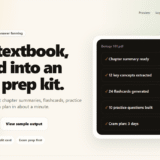
textbooks.ai is an AI-powered exam prep tool that turns any textbook PDF into a complete study kit —…
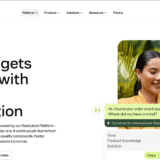
Zendesk is an AI-powered customer service and engagement platform that helps businesses manage customer conversations, automate support, empower…

Perplexity AI is an intelligent AI search and research platform designed to replace traditional search engines with conversational,…
Gemini AI is Google’s advanced multimodal artificial intelligence assistant developed by Google DeepMind. It can understand and generate…

Wonder Studio is an AI-powered visual effects platform that automates one of the most time-consuming parts of filmmaking—animating,…

Shikatagan.ai is a real-time AI news aggregator that pulls stories from Hacker News, TechCrunch, The Verge, Wired, MIT…
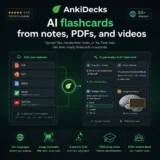
AnkiDecks AI Flashcard Generator is an AI-powered learning platform that transforms PDFs, lecture notes, YouTube videos, textbooks, presentations,…
Creatify is an AI ad platform built to turn a product page URL into a finished, tested video…

NVIDIA AI Enterprise is a production-ready, cloud-native AI software platform that brings together microservices, frameworks, libraries, and GPU…