AI automation and agentic AI for real business processes — built by a senior engineer, not a platform
Last updated September 24, 2026
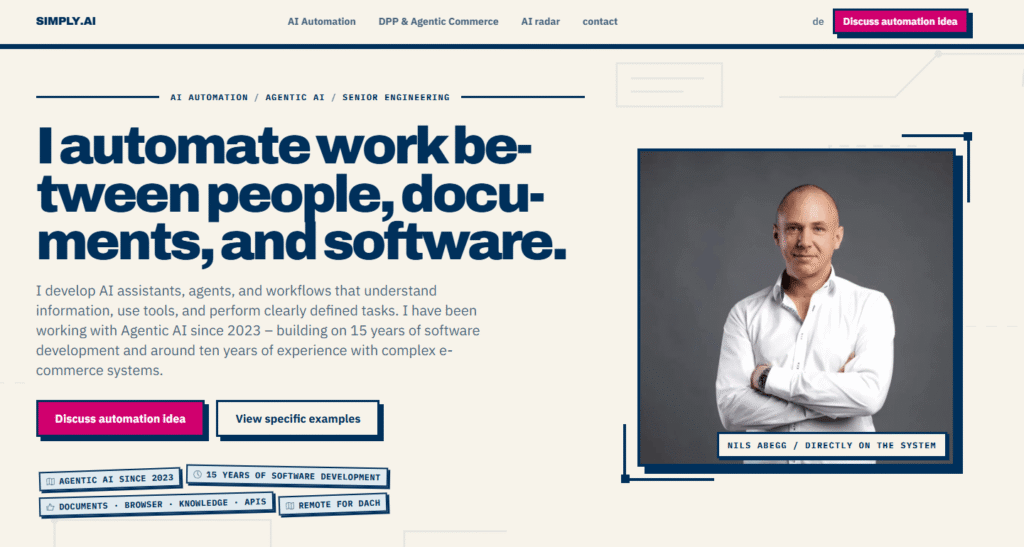
EinfachAI is a specialist AI automation and agentic AI engineering service run by Nils Abegg — a senior software engineer with 15 years of development experience, approximately 10 years in complex e-commerce systems, and a focused practice in agentic AI since 2023.
This is not a SaaS platform or a no-code tool. EinfachAI is a direct engineering service — you work with Nils personally to design, build, and deploy AI assistants, agents, and automation workflows that handle clearly defined tasks between people, documents, and software systems.
The core value proposition is straightforward: there is a large gap between what AI can theoretically do and what actually works reliably in a real business process. EinfachAI bridges that gap by combining deep software engineering discipline with genuine hands-on experience building agentic systems — not just experimenting with demos, but shipping workflows that reduce real workload in production environments.
The service is deliberately scoped. Nils is explicit about what belongs in an AI agent versus a conventional API integration or rule-based worker — a level of technical honesty that is rare in a market full of AI hype. If your process does not need an agent, he will tell you that and recommend the right approach instead.
EinfachAI operates remotely across the DACH region (Germany, Austria, Switzerland) and works across all industries — the deciding factor is not whether a process sounds like AI, but whether knowledge, data, tools, and recurring decisions can be meaningfully combined into a reliable automated workflow.
Nils Abegg is the founder and sole engineer behind EinfachAI. His background is directly relevant to the work:
This combination — serious software engineering experience plus early, deep agentic AI practice — is what differentiates EinfachAI from both generic AI consultants and no-code automation builders.
EinfachAI works across four categories of business process:
AI reads varying formats, extracts relevant information, and prepares the next step in the workflow — replacing manual data entry, review, and routing.
What this covers:
When this is the right fit: Your team regularly receives documents in varying formats and manually extracts information, checks it, and enters it into another system. The process is time-consuming, error-prone, and follows recognisable patterns — but the variation in document formats makes simple rule-based extraction unreliable.
An internal AI assistant researches approved sources, combines relevant context, and presents results with sources and access rules — replacing manual research and case preparation.
What this covers:
When this is the right fit: Your team spends significant time searching for information across internal systems before they can answer a question or handle a case. The information exists — it is just scattered, hard to find, and requires manual synthesis before it is useful.
A constrained browser or desktop agent handles recurring steps in web interfaces that do not offer a proper API — and returns unclear or exceptional cases to a human rather than proceeding blindly.
What this covers:
When this is the right fit: You have a recurring process that requires navigating a web portal — a supplier system, a government portal, a customer platform — that does not offer an API. The process is repetitive and time-consuming but too variable for simple macro-based automation.
APIs, rules, conventional workers, and AI are combined into a single coherent workflow — rather than handing every step to a language model or leaving each system to operate independently.
What this covers:
When this is the right fit: You have a process that spans multiple systems — an ERP, a CRM, a supplier portal, an internal database — and currently requires manual coordination between them. The process has enough variation that simple rule-based integration breaks down, but enough structure that a well-designed agentic workflow can handle it reliably.
EinfachAI offers three ways to engage, depending on where you are in the process:
The primary engagement: Nils designs and implements a constrained automation workflow, connects the necessary systems, and defines measurement, approvals, and operational procedures.
What is included:
Pricing: Custom project-based — contact for a quote after the initial consultation
For situations where the value or technical feasibility of automation is still unclear. Nils prioritises processes and tests the riskiest technical step with representative data before committing to full implementation.
What is included:
When to choose this: You have several potential automation candidates but are not sure which to prioritise, or you have a specific process in mind but are uncertain whether it is technically feasible with current AI capabilities.
For teams that want to build their own AI automation solutions or make better decisions about AI adoption. Nils provides hands-on workshops and technical guidance on agentic AI, AI building practices, secure coding workflows, and realistic use cases.
What is included:
When to choose this: Your team wants to build internal AI capabilities rather than outsource implementation, or your leadership team needs a clearer, more grounded understanding of what AI can and cannot do for your specific business.
In parallel with client automation work, Nils is developing infrastructure for what he calls agentic commerce — the emerging paradigm where AI agents act as buyers, researchers, and decision-makers in commercial transactions.
His thesis: the Digital Product Passport (DPP) — a regulatory requirement for product data transparency in the EU — is not just a compliance obligation. A technically well-implemented DPP creates the structured product identity, attributes, provenance, verification, versions, and permissions that AI buyers will need to discover and process products in agentic markets.
Companies that implement DPP well will not just satisfy regulators — they will make their products machine-readable and agent-accessible in the next generation of commerce infrastructure.
EinfachAI offers DPP consulting and implementation services alongside its core automation work, positioning clients for both current compliance requirements and future agentic commerce readiness.
Senior engineering discipline, not just AI enthusiasm Nils brings 15 years of software engineering rigour to AI automation — which means workflows are designed with proper error handling, escalation paths, audit trails, and operational documentation. This is the difference between a demo that works once and a system that runs reliably in production.
Honest about what needs an agent and what does not EinfachAI is explicit: not every process needs an AI agent. Known, stable steps belong in an API, import, or conventional worker. An agent becomes appropriate when context is incomplete, tools depend on the case, unstructured information must be understood, or exceptions need handling. This honesty saves clients from over-engineering and unnecessary complexity.
Constrained autonomy by design Every agentic system Nils builds includes defined boundaries, documented actions, and escalation paths for unclear or exceptional cases. AI does not operate with blind autonomy — humans stay in the loop where the stakes require it.
Data privacy and European hosting considerations Sensitive data is not automatically passed to public AI models. Data minimisation, access control, model choice, logging, and hosting are treated as architectural decisions. Where appropriate, European hosting, open models, and interchangeable components are used.
Early agentic AI experience Working with agentic AI since 2023 — before most of the current tooling existed — means Nils has built and discarded approaches that did not work, and has a grounded understanding of what actually produces reliable results versus what looks impressive in a demo.
| EinfachAI | No-Code AI Platforms | Large AI Consultancies | Internal AI Team | |
|---|---|---|---|---|
| Expertise level | Senior engineer | Varies | Varies | Depends on hiring |
| Customisation | ✅ Fully custom | ❌ Limited | ✅ Custom | ✅ Custom |
| Speed to start | ✅ Fast | ✅ Very fast | ❌ Slow | ❌ Slow |
| Cost | Mid-range | Low | High | Very high |
| Data privacy control | ✅ Architectural | ❌ Platform-dependent | ✅ Negotiable | ✅ Full control |
| DACH context | ✅ Native | ❌ Generic | ❌ Generic | Depends |
| Honest scoping | ✅ Yes | ❌ Sells platform | ❌ Sells hours | Depends |
| DPP expertise | ✅ Yes | ❌ No | ❌ Rare | ❌ Rare |
EinfachAI is an AI automation and agentic AI engineering service run by Nils Abegg — a senior software engineer with 15 years of development experience and a focused practice in agentic AI since 2023. It is not a SaaS platform but a direct engineering service that designs and builds custom AI workflows, agents, and assistants for businesses in the DACH region.
No. EinfachAI works across all industries. E-commerce is Nils’s technical foundation — approximately 10 years of experience connecting complex, business-critical systems — but the automation capabilities (documents, knowledge, browser interfaces, APIs) apply across sectors including manufacturing, professional services, logistics, healthcare administration, and more.
No — and EinfachAI is explicit about this. Known, stable steps usually belong in an API, import, or conventional worker. An agent becomes appropriate when context is incomplete, tools depend on the case, unstructured information must be understood, or exceptions need handling. If your process does not need an agent, Nils will tell you and recommend the right approach.
Data minimisation, access control, model choice, logging, and hosting are treated as architectural decisions — not afterthoughts. Where appropriate, European hosting, open models, and interchangeable components are used. Sensitive data is not automatically passed to public AI models.
An agentic system does more than answer a question. Within defined boundaries, it can gather information, use tools, perform actions, check results, and escalate difficult cases to humans. The process — not the demo — determines how much autonomy is appropriate. Every system includes escalation paths and documented actions rather than blind autonomous operation.
The starting point is a free 30-minute consultation. You describe a recurring process that your team currently performs manually. Nils gives you an initial assessment of whether conventional automation, an AI workflow, an agent, or no project at all is the right next step — with no obligation.
In parallel with client automation work, EinfachAI is developing infrastructure for agentic commerce — the emerging paradigm where AI agents act as buyers and decision-makers. The Digital Product Passport (an EU regulatory requirement) creates the structured product data layer that agentic commerce will require. EinfachAI offers DPP consulting and implementation that satisfies compliance requirements while also preparing products for discovery and processing by AI agents in future markets.
EinfachAI’s primary focus is the DACH region (Germany, Austria, Switzerland) and operates remotely within this area. For enquiries from outside DACH, contact directly to discuss whether the engagement is feasible.
| Criteria | Rating |
|---|---|
| Accuracy & Reliability | ⭐ 4.2/5 |
| Ease of Use | ⭐ 4.6/5 |
| Features & Functionality | ⭐ 4.0/5 |
| Performance | ⭐ 4.3/5 |
| Customization | ⭐ 4.4/5 |
| Security & Privacy | ⭐ 3.8/5 |
| Customer Support | ⭐ 3.5/5 |
| Value for Money | ⭐ 4.5/5 |
| Integrations | ⭐ 4.1/5 |

Manus AI is an autonomous general-purpose AI agent — you give it a goal, not just a prompt,…
NVIDIA AI Enterprise is a production-ready, cloud-native AI software platform that brings together microservices, frameworks, libraries, and GPU…
Rankability is an AI search visibility platform built specifically for SEO agencies — giving teams a single connected workflow to track…
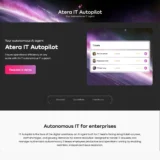
Atera is an all-in-one AI-powered IT management platform built for Managed Service Providers (MSPs), internal IT departments, enterprises,…
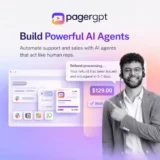
PagerGPT is a no-code AI agent platform that helps businesses build intelligent AI assistants for customer support, sales,…
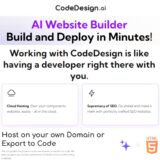
CodeDesign.ai is an AI website builder that helps individuals, startups, agencies, and businesses create professional websites without coding.…
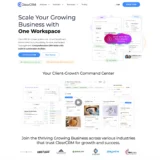
ClearCRM is an all-in-one AI-powered CRM platform designed to help growing businesses manage sales, marketing, customer service, projects,…
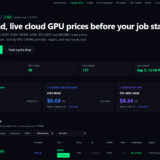
gpu.fund is an independent, live cloud GPU price index that tracks rental prices across 15 cloud providers, 49…
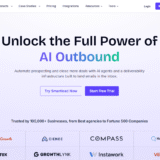
Smartlead is an AI-native cold email and outbound sales platform trusted by over 100,000 businesses — from solo founders and lead…
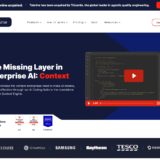
Tabnine is the original enterprise AI coding platform — trusted by millions of developers and thousands of companies worldwide,…
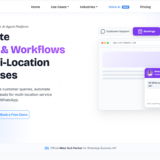
Robofy is an AI agent platform designed to help businesses automate customer support, bookings, and lead generation across…
AIApply is an AI-powered job search platform designed to help professionals land their next job faster. It combines…