12 Ways to Use Bing AI: Complete Guide to Chat, Images & More
Bing AI has become a useful AI assistant for searching the web, answering questions, generating ideas, writing content,…
Read →Every AI detector claims to be the most accurate one available — and if you’ve searched around, you’ve probably noticed the claims don’t agree with each other. One review site says one tool has near-perfect accuracy; another says a completely different tool is best. We compared the leading AI detectors on what they’re actually built for, so you can pick the right one for your situation instead of chasing whichever marketing page shouts loudest.
Quick answer: GPTZero is the best pick for teachers and students, since it was originally built for education and offers a genuinely usable free tier. Winston AI is the strongest choice for publishers, agencies, and managers reviewing team-submitted content. Detecting-AI is the best option if you need detection across multiple AI models, including DeepSeek. And if you want detection and humanizing in one tool, AI Detector Pro covers both.
Before the comparisons: no AI detector is 100% reliable, and you should be skeptical of any tool claiming near-perfect accuracy. Independent testing and community discussions (including widely shared threads on Reddit among students and educators) consistently show two real problems across the entire category — false positives, where genuinely human-written text gets flagged as AI-generated, and false negatives, where lightly-edited AI text slips through undetected. Different detectors also disagree with each other on the same piece of text fairly often, which is exactly why “best AI detector” doesn’t have one clean, universal answer.
What this means practically: treat any AI detector’s output as one data point, not a verdict — especially in academic or employment settings where a false accusation has real consequences. If you’re an educator or manager, that means using a detection score to start a conversation, not to make a final decision on its own.
| Tool | Best For | Free Plan | Rating |
|---|---|---|---|
| GPTZero | Teachers & students | Yes | 4.2/5 |
| Winston AI | Publishers, agencies & managers | Freemium | 4.7/5 |
| Detecting-AI | Multi-model detection (GPT, Claude, Gemini, DeepSeek) | Freemium | 4.4/5 |
| AI Detector Pro | Detection + humanizing in one tool | Freemium | 4.5/5 |
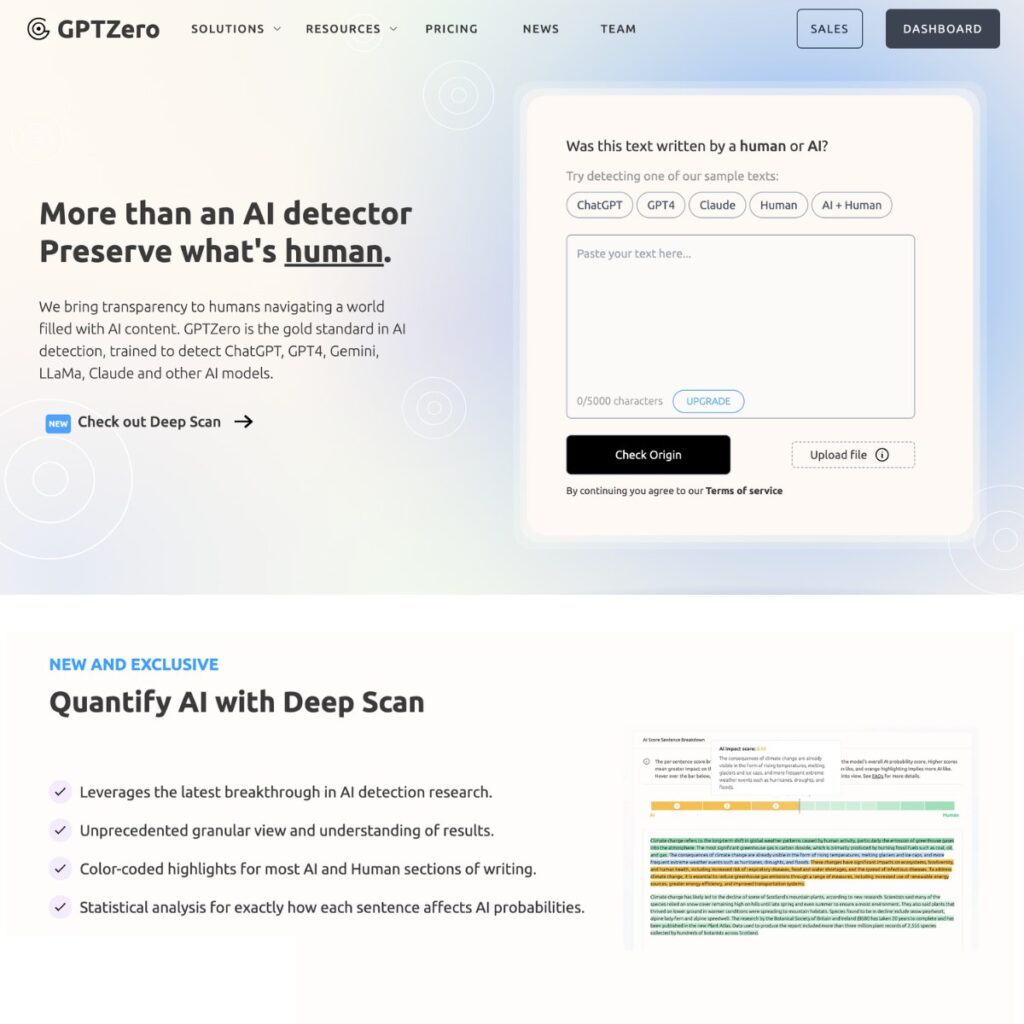
GPTZero was originally built specifically for educators, and it still shows — it offers sentence-level AI highlighting rather than just a single overall score, which makes it easier for a teacher to see exactly which parts of a submission triggered a flag instead of treating the whole document as guilty. Its free tier is also one of the more usable ones in this category, which matters for individual teachers and students who don’t have an institutional budget for a paid detection tool.
Is GPTZero the best AI detector? For education specifically, it’s a very strong pick — but like every detector on this list, it isn’t infallible, and results should support a conversation with a student rather than replace one.
→ Read the full GPTZero review · Visit GPTZero
Winston AI is the highest-rated detector in our own directory and is built with publishers, businesses, and content teams in mind — including a Chrome extension and workflow integrations that flag AI content before it ships, rather than after. That workflow-first design is exactly what makes it a strong fit for managers who need to review AI-content compliance across a team’s submitted work, not just check one document at a time.
Best for managers: if you’re checking employee-submitted reports, articles, or client deliverables for AI-content policy compliance, Winston AI’s integrations and business-oriented features are built for exactly that use case.
→ Read the full Winston AI review · Visit Winston AI
Detecting-AI stands out for explicitly covering a wider range of source models — ChatGPT, Claude, Gemini, and DeepSeek — rather than being tuned mainly around one or two. As more people write with a mix of different AI tools, a detector that isn’t narrowly optimized for just GPT-style output becomes more useful, especially for content teams and platforms that can’t assume which AI model a piece of text came from.
→ Read the full Detecting-AI review · Visit Detecting-AI
If you’re specifically searching for “best AI detector and humanizer,” AI Detector Pro is built to cover both in one platform — checking text for AI-generated patterns and offering rewriting tools in the same place, rather than requiring two separate subscriptions.
→ Read the full AI Detector Pro review
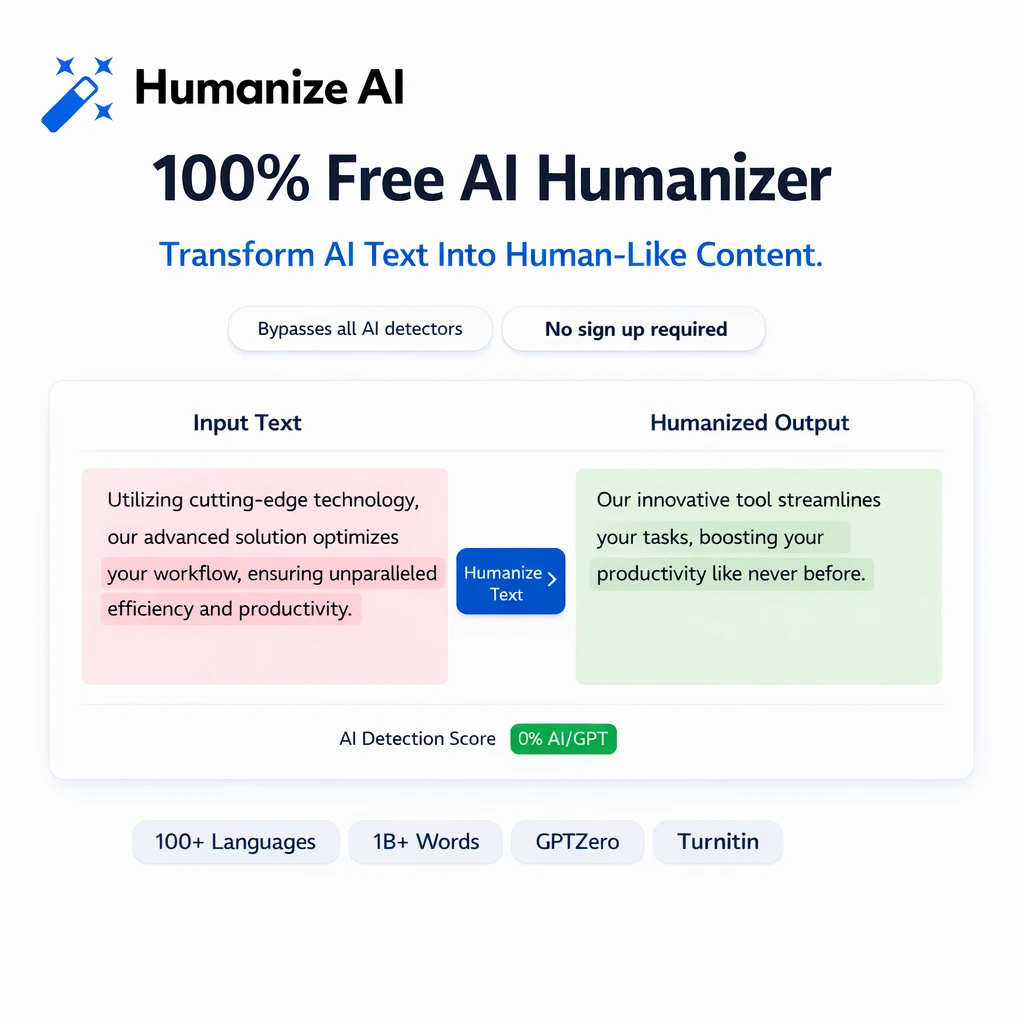
Detectors and humanizers solve opposite problems, and it’s worth being clear about which one you actually need. A detector tells you whether text looks AI-generated. A humanizer rewrites AI-generated text so it reads more naturally — and, often, so it scores lower on detection tools. If your goal is the second one, your site already covers several dedicated options, including StealthGPT, Humanize AI, HumanizerPro, and Semihuman AI.
Worth being upfront about here too: using a humanizer specifically to get past an institution’s detection system (a school’s Turnitin check, for example) is a different situation from using one to improve your own writing’s natural tone, and it’s worth thinking about which one you’re actually doing before you rely on it.
A lot of people searching “best AI detector for Turnitin” are really asking one of two different things, so it’s worth separating them:
If your actual goal is getting AI-assisted writing past Turnitin specifically, that’s worth pausing on — it’s a call about your school’s academic integrity policy, not really a “which tool is best” question, and the tools above aren’t built or positioned to help with that.
What is the best AI detector?
There’s no single universal answer — GPTZero is strongest for education, Winston AI for publishers and business use, and Detecting-AI for multi-model coverage. Independent testing also shows accuracy varies enough between tools that it’s worth treating any single detector’s score as one signal, not a final verdict.
What is the best free AI detector?
GPTZero offers one of the more usable free tiers in this category, particularly for individual teachers and students. Winston AI, Detecting-AI, and AI Detector Pro also offer freemium access with limited usage before requiring a paid plan.
What is the best AI detector for teachers?
GPTZero, since it was originally built for educators and provides sentence-level AI highlighting rather than a single overall score, making it easier to review specific flagged sections with a student.
Is GPTZero the best AI detector?
It’s one of the strongest options, especially for education, but no detector — including GPTZero — is 100% accurate. It’s best used to start a conversation rather than as a final, unappealable verdict.
What is the best AI detector for Turnitin?
No third-party detector can guarantee it matches Turnitin’s institutional results exactly, since Turnitin’s detection method isn’t public. For checking your own original writing before submission, GPTZero or Winston AI are reasonable general-purpose choices.
What is the best AI detector for managers?
Winston AI, thanks to its business-oriented features, Chrome extension, and workflow integrations built for reviewing team-submitted content at scale rather than one document at a time.
What is the best AI detector and humanizer combined?
AI Detector Pro combines both detection and rewriting/humanizing tools in one platform, rather than requiring separate subscriptions for each.

Bing AI has become a useful AI assistant for searching the web, answering questions, generating ideas, writing content,…
Read →Turning a song into a real music video used to mean choreography, a shoot, and hours of editing…
Read →If you’re about to sign up for Fotor’s free trial, you’ve probably searched some version of “is Fotor…
Read →