Zanus AI Pricing Breakdown: Is This Private Enterprise AI Worth the Cost? (2027)
If you have been searching for Zanus AI pricing and hitting a wall — you are not alone.…
Read →Hiring top talent has become one of the biggest challenges for businesses. Recruiters spend countless hours screening resumes, scheduling interviews, following up with candidates, and coordinating with hiring managers. These repetitive tasks slow down recruitment, increase hiring costs, and often lead to losing qualified candidates to faster competitors.
Artificial intelligence is transforming this process. Modern AI recruitment platforms automate repetitive work, analyze candidate profiles, and help hiring teams make faster, data-driven decisions.
Among the emerging AI recruitment solutions, Zanus AI has gained attention for using AI to streamline hiring workflows, improve recruiter productivity, and enhance candidate engagement.
But is Zanus AI the right platform for your organization?
In this comprehensive guide, we’ll explore everything you need to know about Zanus AI, including its features, pricing, benefits, limitations, integrations, use cases, and how it compares with other AI hiring tools.
Whether you’re a recruiter, HR manager, startup founder, or enterprise decision-maker, this guide will help you evaluate whether Zanus AI fits your hiring strategy.
| Feature | Details |
|---|---|
| Product Name | Zanus AI |
| Category | AI Recruitment Platform |
| Best For | Recruiters, HR Teams, Enterprises, Startups |
| Platform | Cloud-Based |
| AI Capabilities | Resume Screening, Candidate Matching, Hiring Automation |
| Integrations | ATS & HR Systems (availability depends on plan) |
| Free Trial | Check current availability on the official website |
| Pricing | Custom / Contact Sales (subject to current plans) |
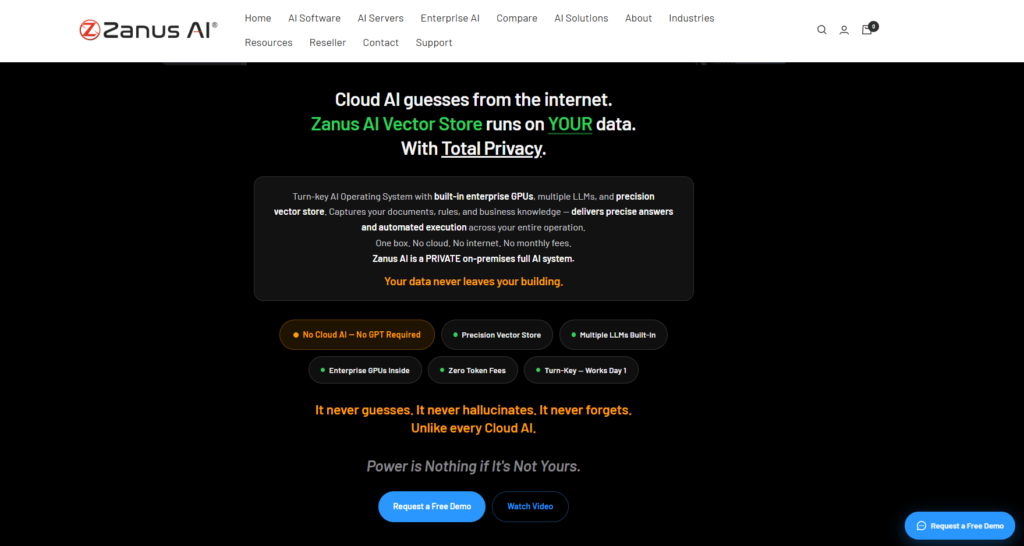
Zanus AI is an AI-powered recruitment platform designed to help organizations automate and optimize different stages of the hiring process. Instead of relying solely on manual resume reviews and repetitive administrative tasks, the platform applies artificial intelligence to identify suitable candidates, improve hiring efficiency, and support data-driven recruitment decisions.
The platform is built to reduce the workload on HR teams while helping recruiters spend more time engaging with qualified candidates rather than handling repetitive operational work.
Typical capabilities of AI recruitment platforms like Zanus AI include:
These capabilities can help organizations reduce hiring time, improve consistency in candidate evaluation, and make recruitment processes more scalable.
Explore More: If you’re researching hiring solutions, browse additional AI HR Tools and AI Recruitment Software on HelloAITools to compare platforms, features, and use cases before making a decision.
Recruitment has evolved significantly over the past decade. Traditional hiring methods often involve reviewing hundreds—or even thousands—of applications manually, scheduling interviews across multiple stakeholders, and managing communication with candidates throughout the hiring journey.
This approach creates several challenges:
AI-powered recruitment software addresses many of these challenges by automating repetitive tasks and helping recruiters focus on strategic hiring decisions.
Common benefits include:
For growing businesses and enterprises alike, these efficiencies can translate into shorter time-to-hire and improved recruitment outcomes.
Zanus AI is designed for organizations that want to improve recruitment efficiency through automation and AI-assisted decision support.
Potential users include:
HR professionals managing multiple open roles can use AI-assisted workflows to reduce repetitive administrative work and focus on employee engagement and hiring strategy.
Recruiters handling high application volumes may benefit from faster candidate screening, better organization of applicant data, and streamlined hiring workflows.
Early-stage companies often have limited HR resources. AI recruitment platforms can help founders manage hiring without building a large recruitment team.
Agencies working with multiple clients can use automation to organize candidates, prioritize applications, and improve operational efficiency.
Larger organizations with complex hiring needs can integrate AI into recruitment workflows to support hiring across departments while maintaining consistency.
Organizations exploring AI recruitment platforms often look for measurable improvements in hiring performance. Depending on implementation and business needs, platforms like Zanus AI may help deliver several operational benefits.
Recruiters frequently receive hundreds of applications for a single role. AI-assisted screening can help prioritize resumes based on predefined job criteria, reducing the time spent reviewing every application manually.
Automation can reduce repetitive administrative tasks such as candidate tracking, workflow management, and interview coordination, allowing HR teams to focus on strategic activities.
AI can analyze candidate information alongside job requirements to identify applicants whose skills and experience align with open positions.
Centralized recruitment platforms allow recruiters, hiring managers, and interviewers to share feedback and coordinate hiring decisions more effectively.
Analytics dashboards can provide insights into recruitment performance, helping organizations monitor hiring trends, identify bottlenecks, and optimize processes over time.
If you’re evaluating multiple recruitment platforms, don’t rely on a single option. Compare different AI-powered hiring tools to understand how their features, pricing models, integrations, and target users differ.
Related topics to explore on HelloAITools:
Artificial intelligence is rapidly transforming the recruitment industry, enabling organizations to reduce manual work, improve hiring efficiency, and create a better candidate experience. Zanus AI positions itself as a modern AI-powered recruitment platform that helps HR teams automate repetitive hiring tasks while making more informed recruitment decisions.
Instead of relying entirely on manual resume screening and traditional hiring workflows, the platform leverages AI to analyze candidate profiles, streamline communication, and simplify recruitment management from application to hiring.
As businesses receive increasing numbers of applications for every open role, platforms like Zanus AI aim to reduce administrative effort while allowing recruiters to focus on interviewing and engaging qualified candidates.
Whether you’re a startup hiring your first employees or an enterprise managing recruitment across multiple departments, AI-powered hiring platforms can significantly improve recruitment speed and operational efficiency.
Recruitment today is no longer just about posting jobs and reviewing resumes.
Companies face challenges like:
These problems have accelerated adoption of AI-powered recruitment software.
According to industry trends, organizations are increasingly investing in AI to:
✔ Improve hiring speed
✔ Reduce recruitment costs
✔ Enhance candidate experience
✔ Improve recruiter productivity
✔ Build stronger talent pipelines
One of the strengths of AI recruitment platforms is automation throughout the hiring journey.
A typical workflow looks like this:
Recruiters create a job description with:
The AI uses this information to understand the ideal candidate profile.
Applications arrive through:
Instead of manually downloading resumes, everything enters one centralized hiring dashboard.
This is where AI provides the greatest value.
Instead of reading every resume individually, the platform analyzes:
Qualified candidates are ranked based on their relevance to the job.
This significantly reduces recruiter workload.
Rather than presenting hundreds of resumes equally, AI prioritizes applicants using various matching criteria.
Recruiters can immediately identify:
This helps teams spend more time interviewing and less time filtering resumes.
Many AI recruitment platforms also automate interview scheduling by coordinating recruiter and candidate availability.
Benefits include:
Recruiters can monitor hiring performance through dashboards showing:
These insights help organizations optimize recruitment strategies over time.
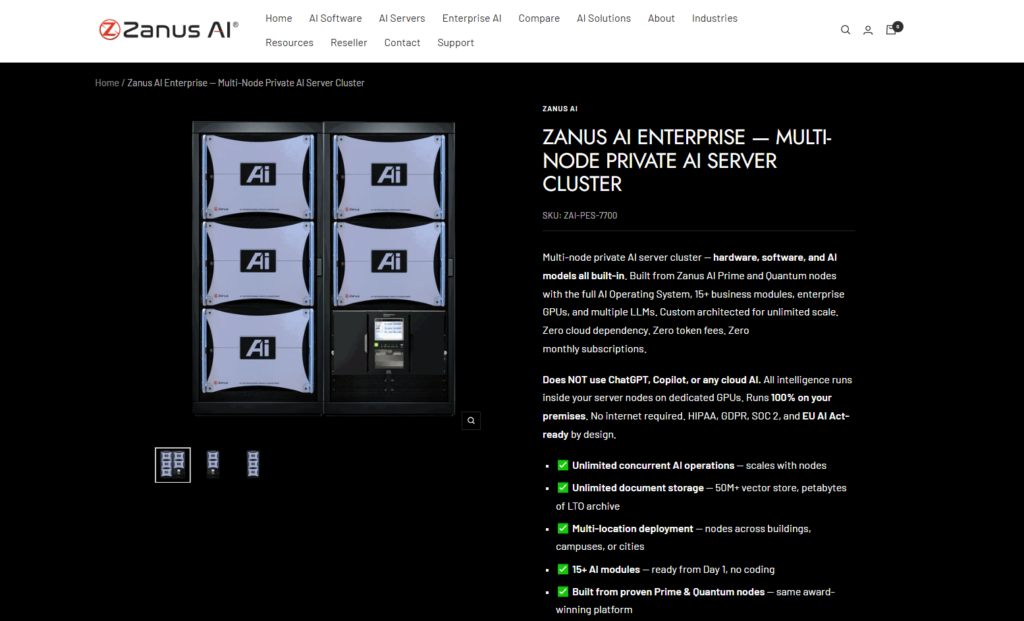
One of the platform’s primary capabilities is AI-powered resume screening.
Instead of spending hours reviewing applications manually, recruiters receive an organized shortlist based on job relevance.
Benefits include:
Matching algorithms compare resumes with job descriptions to identify applicants who best meet hiring criteria.
AI considers:
The result is a more focused list of potential candidates.
Recruitment involves numerous repetitive tasks.
Automation can streamline:
This reduces administrative overhead for recruiters.
Instead of storing resumes across spreadsheets and emails, recruiters can organize candidate information in a searchable talent database.
Benefits include:
Finding candidates manually becomes difficult as databases grow.
AI-powered search enables recruiters to locate candidates using:
This improves recruiter productivity significantly.
Hiring managers gain access to recruitment analytics including:
These dashboards provide visibility across the hiring process.
Recruitment often involves multiple stakeholders.
The platform allows:
to collaborate within one hiring system.
Shared feedback improves decision-making while reducing communication gaps.
Communication is critical during recruitment.
Automation may support:
This creates a better candidate experience.
Although specific implementation details may vary, modern AI recruitment platforms commonly combine several technologies to improve hiring efficiency.
NLP helps the platform understand resume content beyond simple keyword matching.
It can interpret:
This allows for more context-aware candidate evaluation.
Machine learning models continuously improve candidate recommendations by analyzing historical recruitment data and matching patterns.
Potential benefits include:
Unlike traditional keyword search, semantic search focuses on the meaning behind search queries.
For example:
Searching for:
Software Engineer
may also identify candidates with titles such as:
depending on role requirements.
Automation connects multiple recruitment tasks together.
Examples include:
This minimizes repetitive administrative work.
Startups often lack dedicated HR teams.
AI recruitment software can help:
Small companies benefit from:
Large organizations gain:
Every organization hires differently. A startup recruiting five employees has very different needs from a multinational company hiring hundreds each month. AI recruitment platforms like Zanus AI are designed to support a wide variety of hiring scenarios by automating repetitive tasks and improving decision-making.
Below are some practical ways businesses can use Zanus AI.
For startups, every hire matters. Founders often don’t have dedicated HR teams, so they end up reviewing resumes, scheduling interviews, and following up with candidates themselves.
Zanus AI can help startups by:
Example: A SaaS startup hiring its first software engineers can focus on interviewing the strongest candidates instead of manually reviewing hundreds of resumes.
Large organizations frequently manage recruitment across multiple departments and locations.
AI-powered hiring platforms can support enterprise recruitment by:
This helps HR leaders maintain visibility across the recruitment process while scaling hiring efficiently.
Agencies often juggle multiple clients and open positions simultaneously.
Zanus AI may help agencies:
Instead of starting every search from scratch, recruiters can rediscover qualified candidates already in their talent pool.
Companies hiring graduates often receive thousands of applications within days.
AI can help:
This makes large-scale hiring campaigns more manageable.
Industries such as:
often recruit large numbers of employees quickly.
Automation helps organizations:
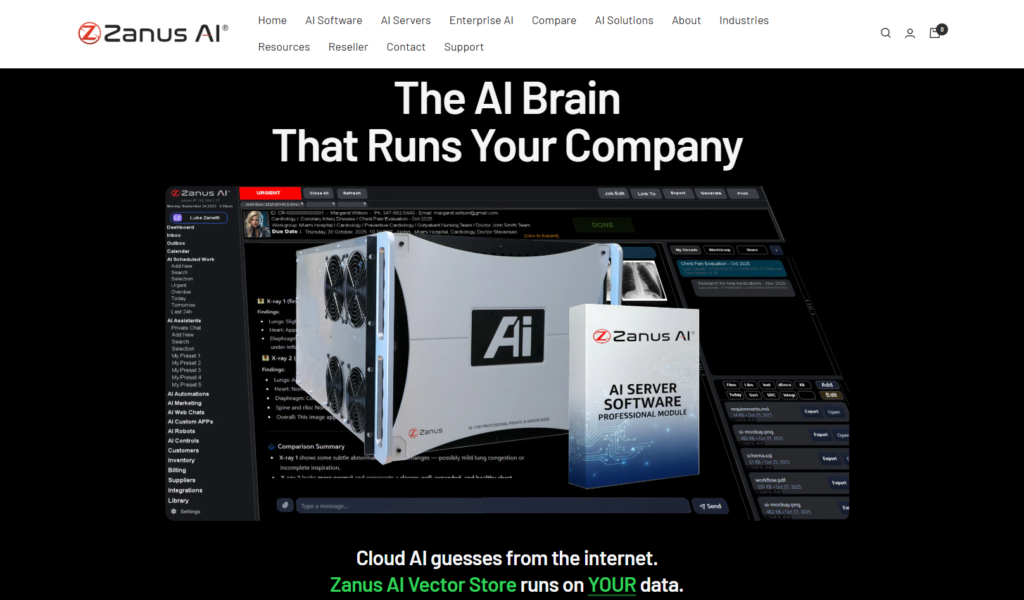
Pricing is often one of the most important considerations when evaluating recruitment software.
While pricing structures may change over time, enterprise AI recruitment platforms typically offer one or more of the following models:
| Plan | Best For | Typical Features |
|---|---|---|
| Free Trial | Evaluation | Limited features for testing |
| Starter | Small businesses | Core recruitment tools |
| Professional | Growing companies | Advanced AI, integrations, analytics |
| Enterprise | Large organizations | Custom workflows, dedicated support, enterprise security |
Many enterprise recruitment solutions provide custom pricing based on factors such as:
Tip: Always request a personalized demo and pricing quote before making a purchasing decision, especially if your organization has unique hiring workflows.
Every recruitment platform has strengths. Potential benefits associated with AI-powered recruitment platforms include:
AI can significantly reduce the time spent reviewing resumes and organizing candidates.
Machine learning helps identify applicants who closely match job requirements.
Recruiters spend less time on repetitive administrative tasks and more time engaging with candidates.
Hiring managers and recruiters can work within one centralized system.
Dashboards help teams measure:
Automation supports faster responses, interview scheduling, and consistent communication.
No recruitment platform is perfect. Businesses should also consider possible challenges before adopting any AI hiring solution.
New users may need time to understand workflows and configure the platform effectively.
Some organizations require integration with existing HR software or Applicant Tracking Systems (ATS), which may involve additional setup.
AI should support—not replace—human decision-making. Recruiters should continue evaluating candidates holistically rather than relying solely on automated recommendations.
Enterprise-focused platforms may represent a significant investment, making it important to evaluate expected ROI against hiring needs.
Modern recruitment platforms often integrate with other business systems to reduce manual data entry and improve workflow continuity.
Common integration categories include:
Before selecting any platform, verify whether it supports the tools your organization already uses.
Recruitment platforms process sensitive personal information, making security a critical consideration.
Organizations evaluating AI recruitment software should look for:
Businesses should review the vendor’s official security documentation to confirm compliance with their internal policies and regional legal requirements.
Rather than relying solely on star ratings, assess user feedback based on practical business outcomes.
Consider questions such as:
Reading reviews from businesses similar to yours can provide more relevant insights than overall ratings alone.
| Feature | Traditional Hiring | Zanus AI |
|---|---|---|
| Resume Screening | Manual | AI-assisted |
| Candidate Ranking | Manual | Automated |
| Interview Scheduling | Manual | Workflow automation |
| Hiring Analytics | Limited | Dashboard insights |
| Candidate Database | Spreadsheets | Centralized platform |
| Collaboration | Email-based | Shared workspace |
| Hiring Speed | Slower | Faster workflows |
Selecting the right AI recruitment platform depends on your company’s hiring volume, budget, required integrations, and automation needs. Below is a high-level comparison to help you evaluate Zanus AI alongside other well-known solutions.
| Feature | Zanus AI | Ashby | Greenhouse | Lever | Workable |
|---|---|---|---|---|---|
| AI Resume Screening | ✅ | ✅ | ✅ | ✅ | ✅ |
| Candidate Matching | ✅ | ✅ | ✅ | ✅ | ✅ |
| Recruitment Analytics | ✅ | ✅ | ✅ | ✅ | ✅ |
| Workflow Automation | ✅ | ✅ | ✅ | ✅ | ✅ |
| ATS Features | Available depending on plan | Yes | Yes | Yes | Yes |
| Interview Scheduling | ✅ | ✅ | ✅ | ✅ | ✅ |
| Enterprise Ready | Yes | Yes | Yes | Yes | Yes |
Key Takeaway:
If your organization values AI-driven automation and recruiter productivity, Zanus AI is worth evaluating. However, the best choice depends on your hiring workflows, team size, integration needs, and budget. Comparing multiple platforms before making a decision is always recommended.
If Zanus AI doesn’t meet all of your requirements, consider exploring these alternatives.
Best for modern recruiting teams that need advanced ATS functionality and hiring analytics.
Ideal For
Designed for structured hiring and enterprise recruitment.
Ideal For
Combines applicant tracking with candidate relationship management.
Ideal For
Popular among SMBs because of its user-friendly interface and broad feature set.
Ideal For
Suitable for businesses already using BambooHR for HR management.
Ideal For
Finding the right recruitment software takes more than reading one review. Before making a purchase decision, compare features, pricing models, integrations, and use cases across multiple platforms.
Explore these collections on HelloAITools:
This helps you discover solutions tailored to your organization’s hiring goals.
Zanus AI may be a good fit for:
✅ HR departments managing multiple open roles
✅ Recruitment agencies handling large candidate pools
✅ Growing startups looking to automate hiring
✅ Enterprises scaling recruitment across teams
✅ Businesses wanting to reduce manual recruitment tasks
You may want to evaluate additional platforms if:
Use this checklist to compare any recruitment software—not just Zanus AI.
Answering these questions will help you choose a solution that aligns with your recruitment strategy.
Zanus AI is an AI-powered recruitment platform that helps organizations automate parts of the hiring process, including candidate screening, matching, and recruitment workflow management.
HR teams, recruiters, recruitment agencies, startups, and enterprise organizations looking to improve hiring efficiency.
Yes. It incorporates AI technologies to assist with tasks such as resume analysis, candidate matching, and workflow automation.
Yes, especially for startups that want to streamline hiring without building a large recruitment team.
Integration availability depends on the platform’s plans and supported connectors. Verify current integrations before purchasing.
AI recruitment platforms commonly provide dashboards for monitoring hiring performance, recruitment funnels, and productivity metrics.
Availability may vary over time. Check the official website for the latest information.
No. AI is designed to support recruiters by automating repetitive tasks and providing insights, while hiring decisions should remain under human oversight.
It is positioned for organizations that need scalable recruitment workflows, though feature availability should be confirmed based on business requirements.
Popular alternatives include Ashby, Greenhouse, Lever, Workable, and BambooHR Recruiting.

If you have been searching for Zanus AI pricing and hitting a wall — you are not alone.…
Read →Searching “free AI video generator no watermark no sign up” usually turns up a wall of listicles promising…
Read →Three tools. Three completely different answers to the same question. The question is: what does “best AI video…
Read →